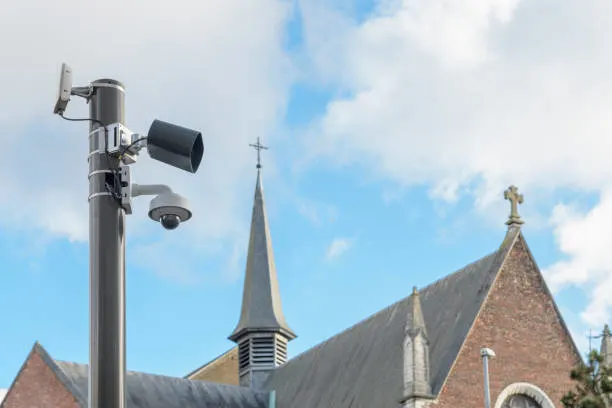
Church security grants are helping more houses of worship afford the robust security measures they need — from surveillance cameras and access control to emergency training and perimeter upgrades. Attacks ranging from vandalism and arson to deadly shootings have highlighted the vulnerabilities faced by faith communities, driving more ministries to seek this type of dedicated funding.
Recent data shows a dramatic rise in hostility and violence against churches in the United States. A report by the Family Research Council documented over 430 hostile incidents against churches in 2023, more than double the number in 2022 – an 800% increase since 2018, averaging about 39 attacks per month.
In response, government agencies, nonprofits, and industry partners are offering security grants available to religious nonprofits. This article explores the rising threats, outlines available security grant programs, and provides practical insights on risk management – including insurance coverages – for church administrators and leaders.

| This guide, written in collaboration with GTC 360° Advisors, answers common questions church administrators and leaders have about these grants. |
|---|
Key Takeaways
- What they are: Church security grants are federal, state, local, or private funds that help houses of worship pay for security upgrades such as cameras, access control, lighting, and training.
- Eligible uses: Funds cover surveillance, perimeter and access-control systems, security personnel, and emergency-preparedness training — not salaries, religious activities, or general building costs.
- Where to look: Major programs include FEMA’s Nonprofit Security Grant Program (NSGP) and state-level funds in California, New York, Florida, Pennsylvania, and Connecticut.
- How to qualify: Most programs require 501(c)(3) status, a security risk assessment, a written security plan, and an itemized budget — and they are highly competitive, so preparation matters.
- Don’t stop at hardware: Pair grant-funded upgrades with the right policies, training, and insurance, including Security Operations Liability and Traumatic Incident Response coverage.
What are Church Security Grants?
A church security grant is a financial resource provided by federal, state, or local governments, as well as private organizations, specifically to help religious institutions strengthen their security infrastructure. These grants fund protective measures designed to prevent threats, attacks, or emergencies, ensuring a safe worship environment.
What Can a Church Security Grant Be Used For?
Church security grants typically cover:
- Surveillance systems (security cameras and monitoring equipment).
- Perimeter enhancements (lighting, fencing, alarms).
- Access control systems (keycard entry, reinforced doors).
- Security personnel or specialized training.
- Emergency preparedness initiatives (e.g., active shooter drills, trauma response training).
Approved investments should directly improve a church’s ability to manage threats and keep congregants safe.
What Can a Church NOT Spend Grant Funds On?
Church security grants come with clear limitations and the funds should be designated towards specific security enhancements. These grants are not intended for religious activities, salaries or general operating expenses.
Examples of non-admitted expenses include:
- Clergy or staff salaries.
- Worship services, ministry activities, or religious materials.
- General building renovations or aesthetic improvements.
- Non-security equipment like musical instruments or general technology.
- Vehicles unrelated to security.
- Weapons, firearms, or ammunition.
What Grants Are Available to Churches?
Several notable church security grants include:
- FEMA’s Nonprofit Security Grant Program (NSGP): Provides federal funding to nonprofits at high risk of terrorist attacks. This program’s purpose is to integrate nonprofit preparedness with broader state and local efforts.
- California State Nonprofit Security Grant Program: Offers grants up to $200,000 annually to nonprofits that are at higher risk of attack due to ideology, beliefs or mission.
- Connecticut Nonprofit Security Grant Program: Provides up to $50,000 per site to support security enhancements.
- Florida Nonprofit Security Grant Program: Allocates $20 million annually to help nonprofits prevent violent attacks and hate crimes.
- New York’s Securing Communities Against Hate Crimes Program: Has provided over $131 million in recent years to support security enhancements.
- Pennsylvania Nonprofit Security Grant Fund: Since the fund’s establishment in 2018, it has distributed $25 million to synagogues, mosques, and other nonprofit organizations
How Does the Church Security Grant Application Process Work?
While the exact process varies by program, most church security grant applications follow these steps:
- Identify the right program — Start with FEMA’s NSGP or your state’s equivalent. Confirm eligibility requirements before investing time in the application.
- Conduct a security risk assessment — Most programs require a formal assessment identifying threats, vulnerabilities, and gaps in your current security posture.
- Develop a written security plan — Outline the specific improvements you intend to make, how they address identified risks, and how the church will maintain them long-term.
- Prepare a detailed budget — Include itemized cost estimates for all proposed enhancements. Some programs require competitive vendor quotes.
- Gather supporting documentation — Collect your 501(c)(3) determination letter and any evidence of prior security incidents or threats.
- Submit through the correct channel — FEMA’s NSGP requires submission through your state or local emergency management agency, not directly to FEMA.
- Track deadlines and follow up — Application windows are often narrow. After submitting, monitor for requests for additional information.
Because these grants are highly competitive, thorough preparation and accurate documentation significantly improve your chances of success.
Who is Eligible for Church Security Grants?
Churches interested in applying must typically meet several criteria:
Nonprofit Status
- Registered as a 501(c)(3) nonprofit or meet equivalent state requirements.
- IRS documentation proving nonprofit status is commonly required.
- Demonstrate clear security vulnerabilities or a history of threats or incidents.
- Utilize grant funds exclusively for approved security-related enhancements.
Threat Assessment or Security Risk
For select grants, churches must demonstrate a risk of violence, vandalism, or hate crimes. Select grants require a security assessment or incident history to justify funding need.
Geographic Location
Select state and local-level grants may prioritize urban or high-risk areas. State-specific grants are limited to churches within that state.
Intended Use of Funds
Funds must be used for security enhancements (e.g., cameras, fencing, lighting, access control, security personnel, training, etc.) Some grants prohibit using funds for regular maintenance or general operational costs.
Participation in Grant Program
Some grants, like FEMA’s Nonprofit Security Grant Program (NSGP), require churches to apply through a state or local emergency management agency.
Potential Downsides of Church Security Grants
While these grants provide valuable resources, churches should consider several potential downsides:
Restrictions to use of funding:
Grants may have specific requirements on how the funds may be used. Funds often cannot be used for salaries, general maintenance, or expenses unrelated to security.
Competitive and limited funding
Grants are often highly competitive, with high volumes of applicants submitting proposals. Some funding amounts have specific caps, limiting the amount of funding available.
Certain grant opportunities prioritize high-risk, urban areas over suburban or rural geographies.
Complex application process
Many grants require detailed applications, including:
- Conduct and submit a security risk assessment.
- Conduct and submit a comprehensive security plan.
- Budget breakdowns and justifications.
Grant applications can often be time-consuming and resource-intensive, particularly for smaller churches and/or churches with limited administrative staff.
Requirements for reporting and overall compliance
Grant applications often have strict federal or state compliance rules, varying by state and/or grant requirements. Examples of grant recipients requirements include:
- Submitting progress reports and financial documentation.
- Adherence to government security standards.
- Undergo audits or inspections to ensure funds are used according to the grant requirements.
Delays to funding and reimbursement
Certain grants operate on a reimbursement basis, requiring the church to pay for security upgrades upfront. Some grants may also be delayed in disbursing funds.
Concerns About Church Autonomy
A major concern for many church leaders is potential loss of autonomy. Accepting government grants could subject churches to additional oversight or specific guidelines that may feel restrictive or intrusive. It’s essential to weigh these considerations carefully and evaluate whether accepting external funding aligns with your ministry’s values and operational independence.
Additional costs
Some grants provide funding for security equipment but do not cover installation or ongoing maintenance. Hiring security personnel or conducting ongoing training may require additional budget allocations not covered by the grant.
When Can Churches Apply for Security Grants?
The U.S. Department of Homeland Security’s Nonprofit Security Grant Program (NSGP) cycle typically opens in the spring (March or April), whereas state-level grants have their own cycles.
For example, the California State Nonprofit Security Grant Program and the Pennsylvania Nonprofit Security Grant Fund typically open in late summer (July or August).
Grant cycles and deadlines change from year to year. Always verify current application windows directly on the program’s official website before planning your application timeline.
Insurance Considerations
While grants can fund physical security improvements, church leaders must also think holistically about risk management and insurance. Enhancing security isn’t just about cameras and locks – it also involves having policies, training, and coverage in place to respond if an incident occurs. Two important insurance coverages relevant to church security are Security Operations Liability and Traumatic Incident Response coverage.
Security Operations Liability Coverage protects the church and members of its security team from lawsuits or liability arising out of security activities. For example, if a volunteer security team member must physically intervene in a disturbance and someone is injured or claims emotional distress, this coverage can help shield the church from legal and financial fallout.
Traumatic Incident Response Coverage can help a ministry recover in the aftermath of a violent or traumatic event on site. This insurance can provide additional funds for needs like medical expenses, counseling services, facility repairs or rentals, and other crisis response costs following a traumatic incident like a violent attack.
The Safe and Secure Church Book Set

Beyond insurance, comprehensive risk management for church security includes developing policies and training your team. A clear security plan or manual that covers topics like how to handle disruptive individuals, lock-down procedures, evacuation routes, medical emergencies, and communication during a crisis.
Regular training and drills are vital so that staff and volunteers know how to respond under pressure. Many organizations offer guides to help. For example, the Safe and Secure Church Book Set by Group Publishing (in partnership with Brotherhood Mutual) helps ministries build and improve their security teams.
For a free self-assessment, ministries can access the U.S. Department of Homeland Security self-assessment tool and user guide. This tool can help your ministry quickly identify gaps in your security operations and areas for improvement.
Final Thoughts
Church security grants can play a vital role in protecting congregations, especially given increasing security threats facing houses of worship. However, careful planning, thoughtful consideration of grant guidelines, and clear communication within your church leadership are critical to maximizing these resources while preserving your ministry’s autonomy and integrity.
If your church is considering applying for a security grant, GTC 360° Advisors can provide expert assistance to streamline the application process and enhance your likelihood of success.
About GTC 360° Advisors
GTC 360° Advisors is a leading consulting firm specializing in business strategy, government contracting, grants advisory services, and public affairs. With a proven track record of securing over $600 million in contracts and grants, GTC 360° Advisors helps organizations across diverse industries—including nonprofits and faith-based groups—successfully navigate complex funding processes. Their comprehensive approach includes strategic opportunity identification, proposal development, and post-award program management, ensuring clients achieve meaningful and sustainable results. To learn more, visit GTC360.com.
Conclusion
This post was created by the team at ChurchWest to help ministry leaders navigate complex decisions with clarity and care. If you want to explore more resources or talk with our specialists, we are here to help.