Each week, your church collects offerings and manages sensitive data: payroll, member info, and background checks, all containing valuable personal details.
This information is valuable to cybercriminals, yet most churches lack adequate protection if it’s breached.
In this article, we’ll walk through the data your church already stores, why ministries are increasingly targeted, what your current coverage may be missing, and what you can do about it today.
Your Church Holds More Sensitive Data Than You Think
Take a mental inventory of what your church stores digitally (or in filing cabinets):
- **Giving records **with names, addresses, and bank account or credit card details
- **Social Security numbers, **collected during background checks for staff and volunteers
- **ACH routing information **for recurring givers
- **Children’s ministry records, **including minors’ personal details and family information
- **Counseling notes **that may contain deeply private disclosures
- **Employee payroll data, **including W-2s and tax information
This isn’t hypothetical. Ministry insurance carriers have noted that everything from mailing lists and donation records to social security information and banking details may live in a church database. Left unsecured, that data puts both the ministry and its people at risk.
The fundamental issue is data and data handling. If your church is collecting data, you’re a target. Size, denomination, and location don’t matter nearly as much as what you’re storing.
Churches Are Being Targeted. Yes, Yours Too.
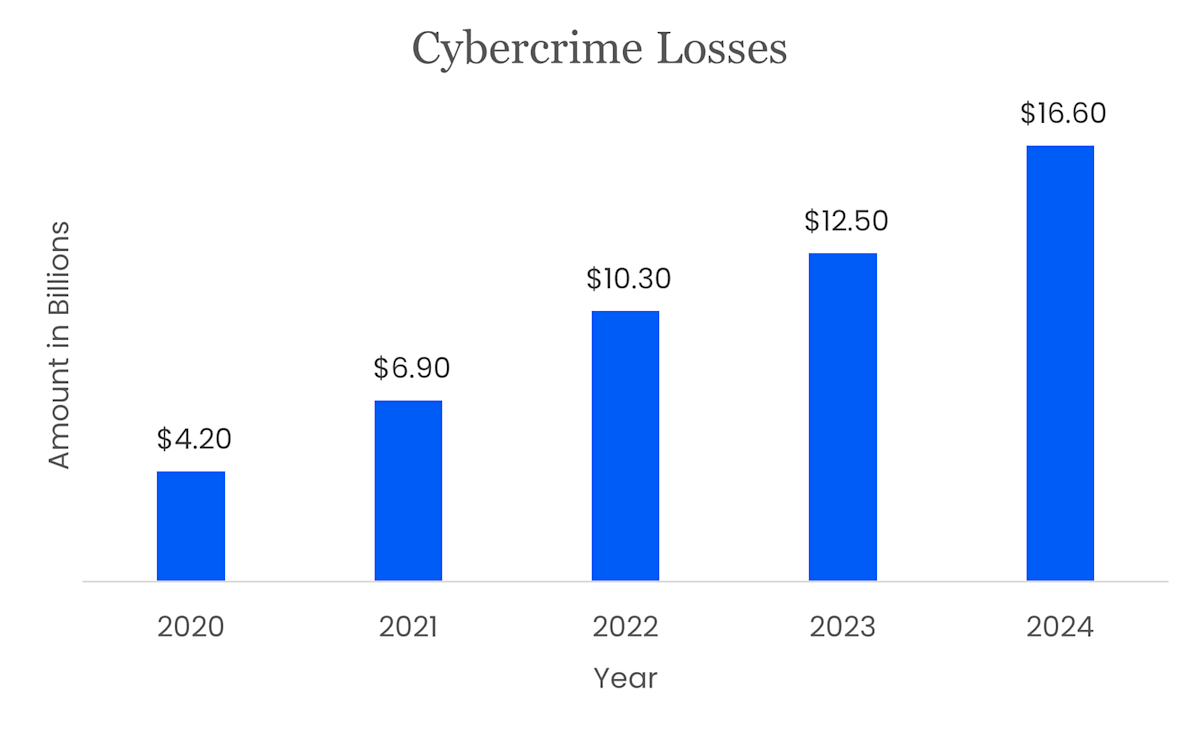
Cybercrime is growing fast across every sector. The FBI’s Internet Crime Complaint Center reported that total cybercrime losses in the U.S. grew from $4.2 billion in 2020 to $16.6 billion in 2024. That’s nearly four times the losses in just five years.
Ministries are not exempt. Industry research confirms that scammers are specifically targeting nonprofit organizations through tactics like impersonating a pastor via email to request urgent wire transfers, or sending fake requests for W-2 files.
We see this firsthand. One church we work with received a fake invoice from what appeared to be a trusted vendor. The finance team wired the payment before anyone realized it was a scam. It wasn’t a sophisticated hack. It was a convincing email and a moment of trust.
These incidents are only becoming more common, and they don’t require advanced technical skills to pull off. That’s exactly what makes them dangerous for organizations that may not have dedicated IT staff watching for red flags.
Your Current Policy Probably Isn’t Enough
Here’s where things get tricky. Many churches already have some cyber coverage bundled into their commercial package or business owner’s policy (BOP). That can create a false sense of security.
The issue usually isn’t that you have zero coverage. It’s possible that you may not have enough coverage. Bundled cyber endorsements often carry lower limits than what a real incident demands, and the scope of what’s covered can be narrower than you’d expect. The gap between what you assume you have and what you’d actually need in a breach is where the risk lives.
This is common across the industry. Many standard insurance policies don’t include dedicated cyber liability coverage unless the customer specifically requests it.
A dedicated church cyber liability insurance policy is designed to respond to the specific costs that come with a cyber event:
What a Cyber Liability Policy Typically Covers
- Breach notification costs (you may be legally required to notify affected individuals)
- Forensic investigation to determine what happened and what was exposed
- Legal defense fees and regulatory fines
- Credit monitoring services for affected individuals
- Crisis management and public relations support
- Data recovery and system restoration
- Ransomware response (where applicable)
Coverage varies by policy. Talk with your ChurchWest agent about the specifics of your situation.
For a deeper look at real-world coverage scenarios, see our complete guide to cyber liability coverage.
The Cost of Church Cyber Breach vs. The Cost of Church Cyber Insurance
For large organizations, a data breach costs an average of $4.88 million, according to IBM’s 2024 report. That figure includes notification, forensics, legal fees, and lost business. For a church, the dollar amount will be smaller, but the categories of cost are identical.
Even a “small” breach can run into tens of thousands of dollars once you account for notification requirements, forensic investigation, and legal review. Compare that to the annual premium for a dedicated cyber policy, which for most churches represents a fraction of that exposure.
Our agents consistently describe dedicated cyber coverage as one of the best values in a church insurance program. We can’t quote specific premiums here because every ministry is different, but the gap between what a breach costs and what a policy costs is almost always significant.
If your church is operating on a tight budget (and most are), this is one of those areas where a small investment now prevents a disproportionately larger expense later.
The Damage Goes Beyond Dollars
A data breach doesn’t just hit the budget. It hits the trust your congregation has placed in you.
When a church loses control of personal data, the fallout includes questions from families, hesitation from donors, and a general sense that the organization wasn’t prepared. Rebuilding that trust takes far longer than resolving the technical issue.
Ministry disruption is real, too. Staff hours get redirected to incident response. Giving platforms may be taken offline. Communication channels may be compromised. The day-to-day work of ministry stalls while leadership deals with the crisis.
IBM’s research found that 70% of breached organizations reported the incident caused “significant or very significant disruption,” and recovery took more than 100 days for most organizations that achieved full recovery.
Don’t Forget Your Vendors
There’s one more risk most church administrators don’t think about until it’s too late: vendor liability.
If your church uses third-party platforms for online giving, church management, or member communication, you may be inheriting cyber exposure from those systems. When a breach originates in a vendor’s platform, your church can still face liability for the data that was compromised.
This doesn’t mean you should stop using those tools. They’re essential to modern ministry operations. But it does mean your insurance coverage should account for the data you’re entrusting to outside systems, not just the data sitting on your own network.
What to Do Next
You don’t need to become a cybersecurity expert. But you do need to know whether your current coverage matches the reality of what your church stores and how it operates.
Here’s a practical starting point:
- **Take a data inventory.- **List every system that stores personal or financial information: your ChMS, giving platform, payroll provider, email accounts, and even physical filing cabinets.
- **Review your current policy -**Ask your agent specifically about cyber coverage limits and what’s included. Don’t assume your package policy has you covered.
- **Talk to a specialist -**A ChurchWest agent can walk through your exposure, review your current coverage, and recommend the right level of church cyber insurance for your situation.
ChurchWest has spent over 50 years protecting more than 4,400 California ministries. Cyber liability is one of the fastest-growing areas of risk we help churches navigate, and our agents understand the unique way ministry operations create exposure.
Ready to find out where you stand? Request a cyber liability review from ChurchWest, and we’ll help you close the gap between what you have and what you need.
Conclusion
This post was created by the team at ChurchWest to help ministry leaders navigate complex decisions with clarity and care. If you want to explore more resources or talk with our specialists, we are here to help.