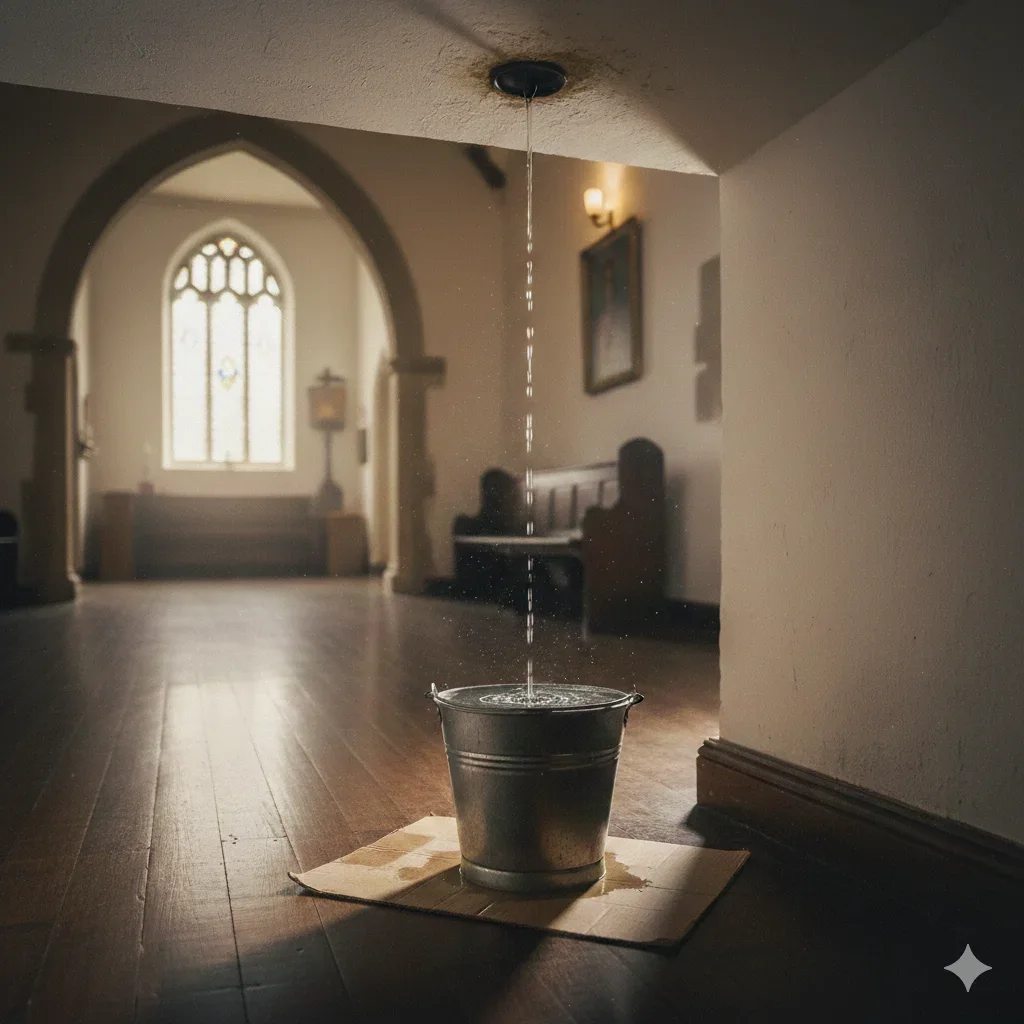

It’s 7 a.m. on a Sunday after a night of hard rain. Your first volunteer unlocks the fellowship hall and finds water on the floor, three hours before first service. Instead of getting ready to welcome people for worship, your team is facing a different set of questions: Where is the water coming from, how much damage has it done, and will your insurance cover it?
Heavy rain can turn an ordinary Sunday into a scramble, and El Niño winters can bring heavier storms to California. This guide covers what to check on your church property, what to plan with your team, and the flood coverage question to answer before the next storm arrives.
What El Niño could mean for California churches
El Niño is a climate pattern driven by unusually warm ocean temperatures in the tropical Pacific, and it can shift weather patterns around the world. In California, stronger El Niño events can raise the potential for heavy rain, flooding, and debris flows, although the impact varies from one region to the next.
For ministries, the takeaway is simple. A strong El Niño doesn’t guarantee an unusually wet winter in every part of California, but it is a good reason to prepare for heavier storms.
El Niño preparedness checklist for churches
Before the next storm, ask someone from your facilities team to walk the property with you. Start with these areas.
Outside the building
- Clear gutters, roof drains, and downspouts, and make sure water drains away from the building.
- Clear storm drains and catch basins in the parking lot and along walkways.
- Check the ground around each building. It should slope away from the walls, not toward them.
- Inspect the roof and flashing for loose, cracked, or missing pieces, especially over the sanctuary and older wings.
- Have vulnerable trees and overhanging limbs inspected and trimmed as needed.
- Stock sandbags for low doorways and any entry that has taken on water before. Check whether your county or city offers free sandbags.
Inside the building
- Test any sump pumps now, before you need them.
- Lift sound, media, and electrical equipment off the floor, especially power strips and amplifiers.
- Move nursery and children’s ministry supplies off the floor in low-lying rooms.
- Move church records, archives, and anything irreplaceable out of basements and low storage rooms.
- Photograph or video each room and its contents, and keep a copy stored safely off-site.
- Make sure at least two people know where the water, gas, and power shutoffs are and how to reach them. Label each shutoff so it’s easy to find.
During a storm, stay out of flooded areas and don’t try to clear drains while water is rising. People come first; the building can wait.
If your ministry has a camp or retreat property
If your property sits in the foothills or mountains below an area that has burned in recent years, heavy rain can trigger dangerous debris flows, mudslides, and road closures. Sign up for local emergency alerts, keep culverts and drainage channels clear, and map out evacuation routes.
Decide now who has authority to cancel activities or evacuate guests and staff, so no one has to make that call in the middle of a storm.
How to make a church emergency plan for heavy rain
A storm plan doesn’t need to be long. It needs clear answers, decided ahead of time, so your team can focus on caring for people when the weather turns. Settle these four things with your team this week:
- Know where you’ll get information. Ask staff and members to sign up for their county’s emergency alerts, and share Listos California’s storm season guides, which come in many languages.
- Know who makes the call and how you’ll share it. Name who can delay or cancel services, classes, or events, and who sends the message. Pick the channel now, whether that’s text, email, social media, or a banner on your website.
- Know who may need extra help. Choose a care lead and a backup. Invite members who may need a phone call, a ride, translation, or help during a power outage to join a simple check-in list.
- Know where you’d worship instead. Whether that’s a neighboring church, a school gym, or an online-only service, decide on a backup before you need it.
Does church insurance cover flood damage?
You can do everything on the checklist and still have water get inside. That brings us back to the question from Sunday morning: will your insurance cover it? The answer depends partly on where the water came from, because not every kind of water damage is treated the same way.
Not all water damage is considered flood. Rising surface water that flows into your building may be treated differently from rain that comes through a damaged roof or water from a burst pipe, and what’s covered depends on what caused the damage and the terms of your policy. Many church property policies exclude flood, which is why flood coverage is often purchased separately.
Flooding isn’t limited to properties near the coast or a river. Heavy rain can overwhelm drainage systems and send surface water into buildings in areas that may not seem flood-prone. You can check your property’s mapped flood risk with FEMA’s Flood Map Service Center.
Timing matters, too. Flood coverage may not take effect the day you buy it, and depending on the policy, a waiting period may apply, so waiting until rain is in the forecast could already be too late.
If you’re not sure how your ministry’s policy would respond, ask your agent to review it with you, including when any new coverage would take effect, before a storm gives you a reason to find out.
What to do if water gets inside your church
Even with good preparation, water can still find its way inside. If it does:
- Keep people safe. Keep everyone away from standing water, damaged electrical equipment, and other hazards.
- Stop more water from coming in, if you can do so safely. For example, shut off the water supply if a pipe has burst.
- Document everything. When it’s safe and practical, take photos and video of the affected areas and damaged property before you move or throw anything away. Keep receipts for any emergency repairs or cleanup.
- Report the damage to your agent. If ChurchWest is your agent, call us at (800) 843-6054, and we’ll help you understand the next steps for your claim.
Get ready before the rain
Preparing for a storm is an act of stewardship. It helps protect the property your congregation has invested in and gives your leaders fewer decisions to make when the weather turns.
Walk the property. Make the plan. Review your coverage. And do it while the skies are still clear.
This article is provided for general informational purposes only and does not constitute legal, tax, or insurance advice. Coverage descriptions are summaries; the terms, conditions, and exclusions of your own policy govern what is actually covered. Laws and regulations change and vary by jurisdiction. For guidance specific to your ministry, please consult a qualified professional or your ChurchWest agent.