
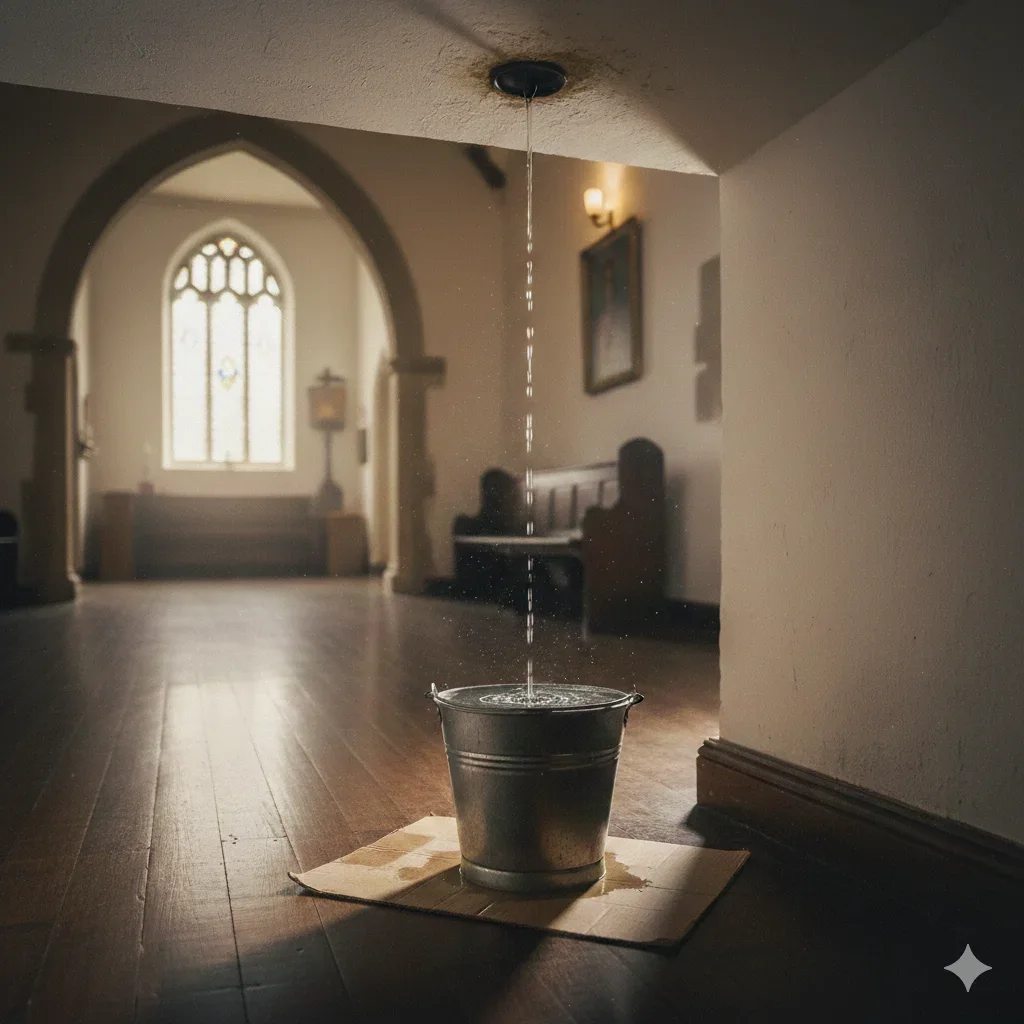
Water damage rarely waits for a convenient time. A roof leak, a burst pipe, or a failed water heater can leave your ministry staring at a wet floor and wondering what to do first.
The first few hours matter. The right steps can help prevent further damage to your church and make the insurance claim process easier to navigate.
Water in Your Building Right Now? Start Here
- Keep people away from standing water and electrical hazards.
- Stop the source of the water if it’s safe to do so.
- Take photos and video of the damage.
- Note the date and time you discovered the water.
- Contact your insurance agent.
- Move undamaged property out of harm’s way and begin drying the area when safe.
- Keep damaged property and receipts until you’ve spoken with your agent or adjuster.
The steps below walk through each of these in more detail.
Step 1: Make It Safe
People come first. Keep everyone out of areas with standing water until it’s safe.
- If water is near outlets, electrical panels, cords, or equipment, keep people away from the area. Do not enter standing water to reach electrical equipment. Contact a qualified electrician or your utility provider if power needs to be shut off.
- Stay out from under sagging or bulging ceilings. Saturated drywall can come down without warning.
- Shut off the water at the main valve if the source is a pipe or fixture and it’s safe to do so.
- If sewage is involved, treat the water as contaminated and keep people away from it.
Step 2: Document the Water Damage
As soon as it’s safe, take photos and video of the damage before moving or throwing away affected property. Your photos and videos create a record of what the building and property looked like immediately after the loss.
- Walk each affected room. Show the floors, walls, ceilings, and the water line.
- Capture the source if you can see it, such as the burst pipe, the failed fitting, or the leak in the roof.
- Photograph damaged items, such as furniture, equipment, hymnals, and sound gear, with their labels or serial numbers where possible.
- Note the time you discovered the water and what you did about it.
Step 3: Report the Water Damage Claim to Your Agent
Once everyone is safe and you’ve documented the damage, contact your insurance agent as soon as possible. Even a loss that looks manageable at first can extend behind walls, beneath flooring, or into insulation.
Your insurance agent can help you report the loss, understand what information is needed, and explain the next steps in the claims process.
Your agent works with you throughout the claim; the adjuster is assigned by the insurance company to investigate the loss and evaluate the claim.
Is It Water Damage or a Flood?
When you report the loss, your agent will want to know where the water came from. Insurance policies distinguish between different types of water damage, and the source of the water can affect whether coverage applies.
- Plumbing-related water damage comes from water escaping a burst or frozen pipe, water heater, appliance line, or plumbing fixture.
- Flooding generally involves rising or accumulating surface water from outside the building, such as water from overflowing rivers, creeks, or other bodies of water. Your policy’s definitions determine what qualifies.
- Sewer or drain backup happens when water or sewage comes up through floor drains, toilets, or sinks from the line outside, and it may be treated differently from both.
If heavy rain is in the forecast, Before the Rain Comes: El Niño Preparedness for California Churches walks through what to check on your property and how to plan with your team before the next storm.
Step 4: Stop the Damage From Spreading
As soon as it is safe, take reasonable steps to protect the property from further damage. Don’t wait for an adjuster to begin. Move quickly: the longer materials remain wet, the greater the risk of mold and further deterioration. The EPA advises responding to water damage within 24 to 48 hours to help prevent mold growth.
- Move undamaged furniture, books, and equipment away from the affected area.
- Begin removing standing water and increasing airflow to help dry the area.
- Set aside damaged items rather than immediately throwing them away. Check with your agent or adjuster before disposing of them.
- In nurseries and children’s areas, set aside soaked toys, cribs, and soft goods, and don’t reuse them until they’ve been assessed.
- Keep receipts for expenses related to protecting or drying the property, such as equipment rentals or emergency services.
If water has soaked into drywall, flooring, insulation, or other building materials, professional drying and assessment may be necessary.
Step 5: Choose the Right Restoration Company
When a loss needs professional drying, your agent may be able to connect you with restoration companies experienced in working with ministries and insurance claims. Before you sign a restoration agreement, make sure you understand the scope of work, how you’ll be charged, and who is responsible for payment. Look closely for:
- Assignment of benefits language that transfers some of your insurance rights to the contractor
- Direction-to-pay language that has insurance payments sent to the contractor
- Terms that let the contractor communicate or negotiate with your insurance company on your behalf
- Open-ended pricing, or approval for additional work without your sign-off
Not sure what you’re signing? You can upload the agreement through our Legal Assist page for a free review by attorneys, available to ministries whether or not ChurchWest is their insurance agent.
Step 6: Plan for Repairs and Ministry Disruption
As drying and mitigation move forward, your restoration team and adjuster can assess what can be cleaned or repaired and what may need to be replaced.
Emergency mitigation and permanent repairs are different. Coordinate with your adjuster before authorizing permanent repairs or major reconstruction whenever possible.
- Start an inventory of damaged items with an estimated replacement cost for each.
- Once you receive the adjuster’s estimate, review the planned repairs and costs before authorizing major work.
- If the contractor discovers additional damage, notify your adjuster before the additional work proceeds whenever possible.
If the damage keeps you from meeting in your building, you may need a temporary space for services, classes, or your school. Ask your agent whether your policy includes coverage for extra expenses like a temporary meeting space, and talk with your adjuster before you commit to one.
Keep Your Water Damage Claim Organized
A water damage claim can quickly generate a lot of paperwork, calls, estimates, receipts, and decisions. Choosing one person at your ministry to coordinate the claim can help keep important information from getting lost. Keep a simple claim file with:
- Photos and videos
- The claim number and your adjuster’s contact information
- Contractor estimates
- Receipts and invoices
- An inventory of damaged property
- Notes from conversations with your adjuster or restoration company
Water damage can disrupt far more than your building. It can affect worship services, school days, programs, and the people who depend on your ministry. Keeping people safe comes first. From there, focus on preventing further damage and staying in communication with your agent and adjuster throughout the recovery.
If ChurchWest is your insurance agent, call us at (800) 843-6054. We’ll help you understand what comes next so you can focus on getting your building back in use and your ministry moving forward.
This article is provided for general informational purposes only and does not constitute legal, tax, or insurance advice. Coverage descriptions are summaries; the terms, conditions, and exclusions of your own policy govern what is actually covered. Laws and regulations change and vary by jurisdiction. For guidance specific to your ministry, please consult a qualified professional or your ChurchWest agent.