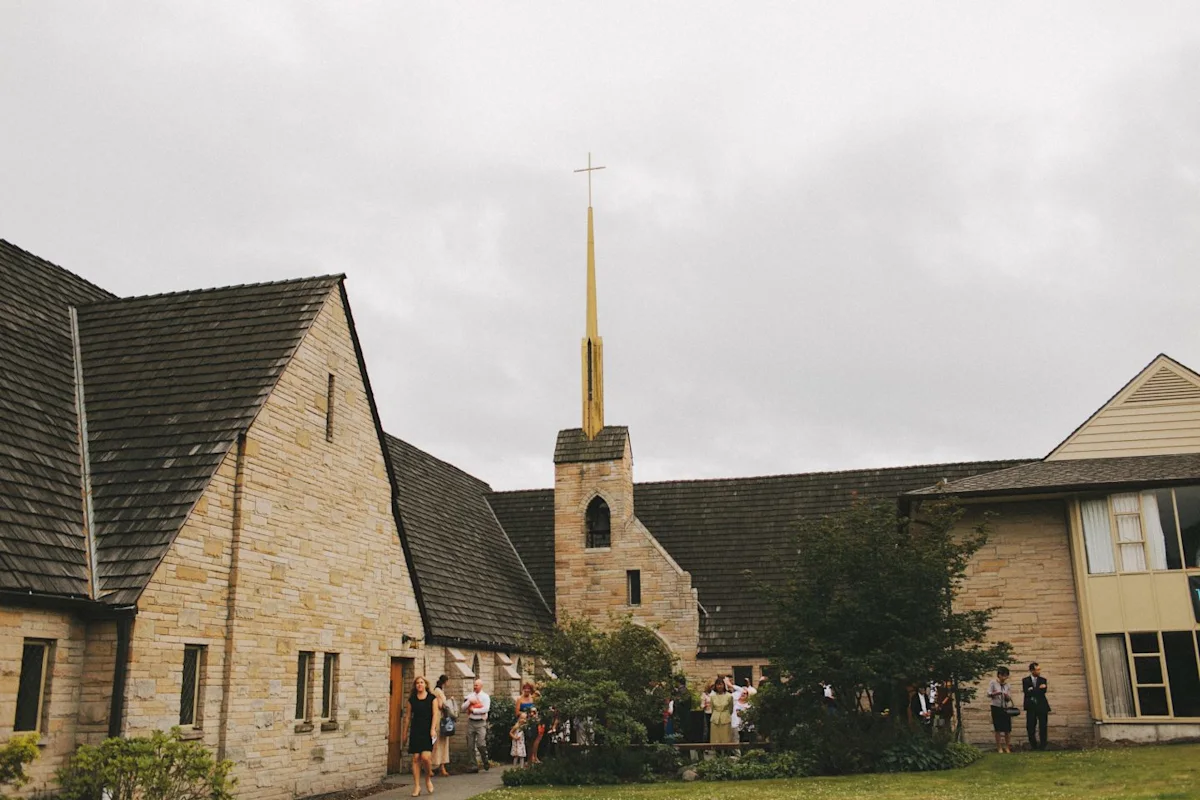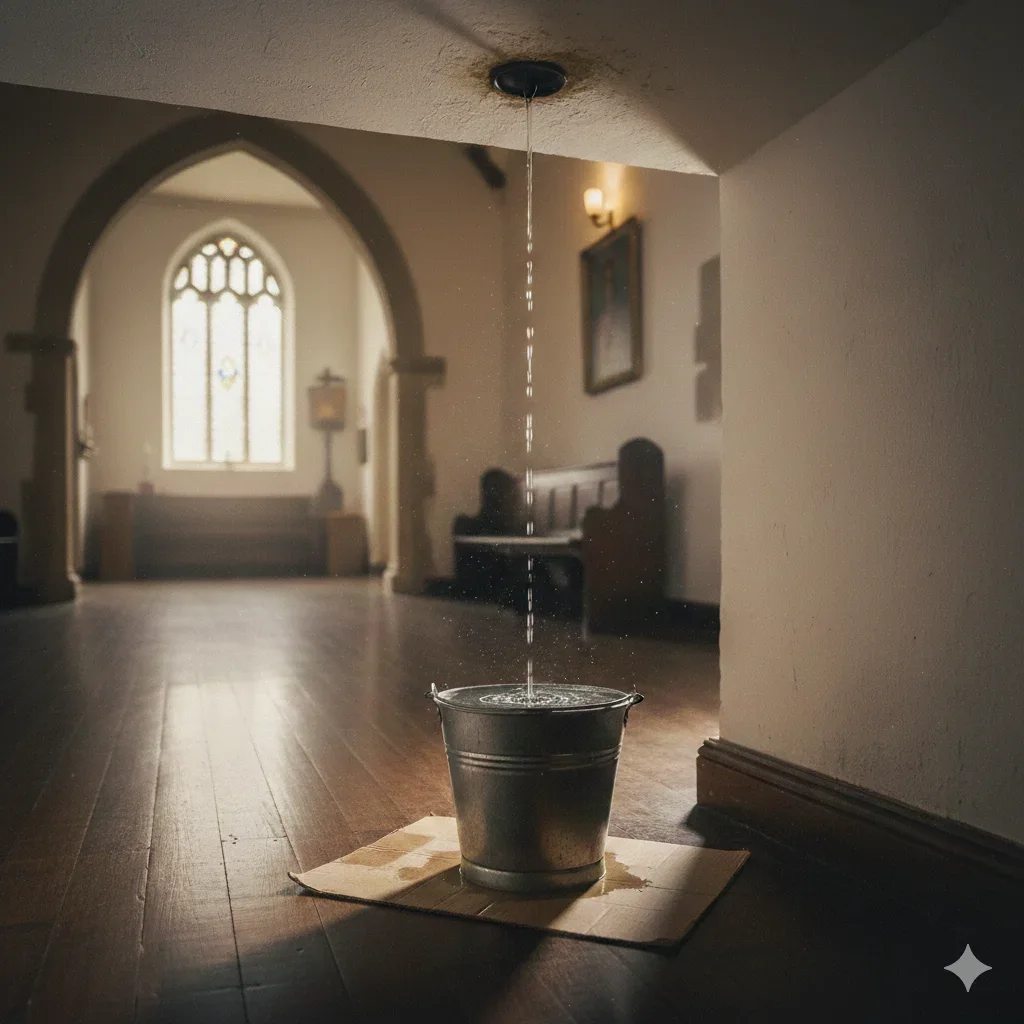
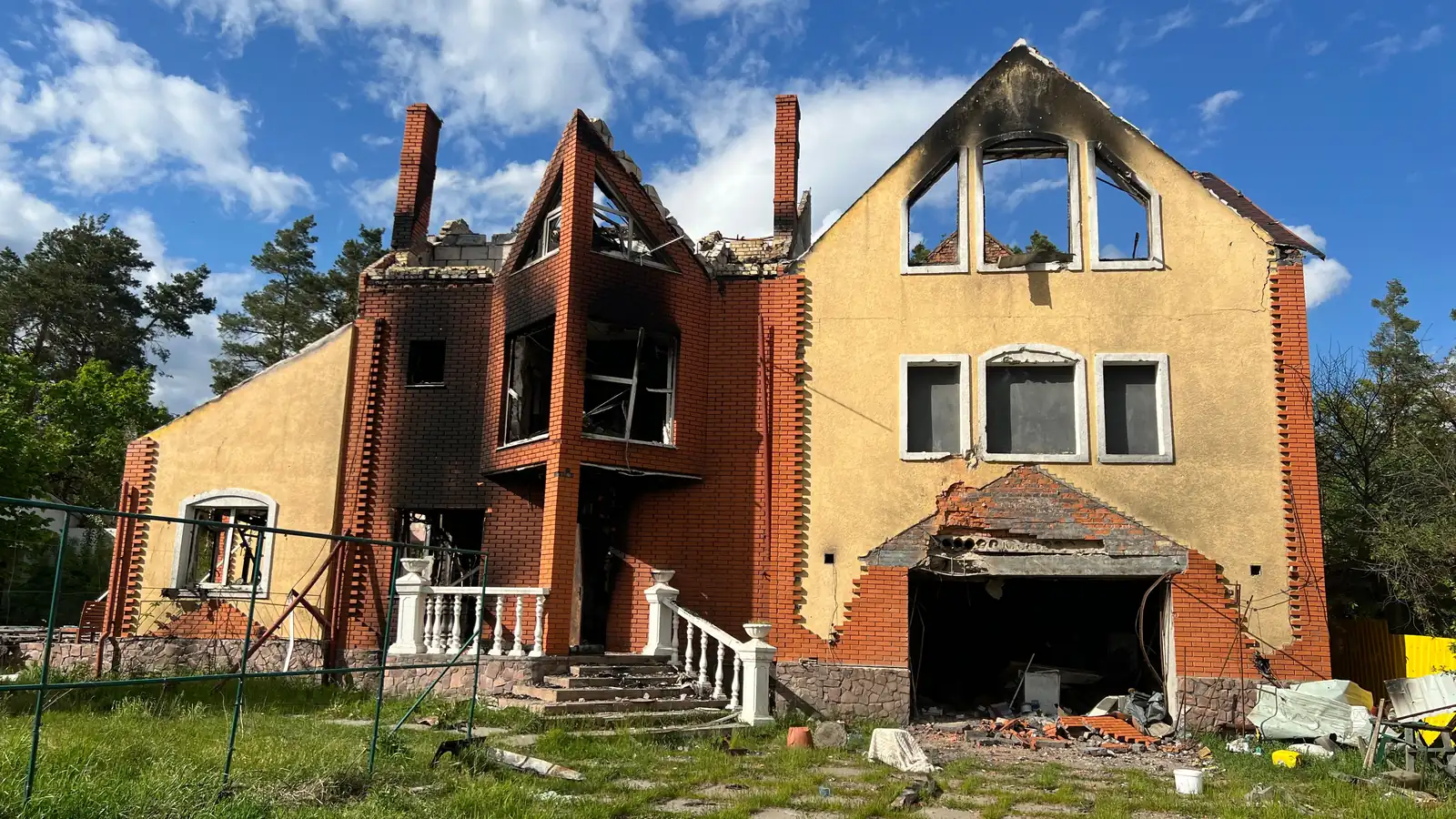
When a fire damages part of your church, you file a property claim and expect the insurance money to cover the rebuild. Then the building department reviews your rebuilding plans and requires upgrades your original building never had.
Now the rebuild costs more than replacing what was damaged. Who pays the difference?
Building codes set requirements for how buildings must be constructed, repaired or altered, and they change over time. When your church rebuilds after a covered loss, it may have to meet today’s requirements rather than the ones in place when it was built. That’s where ordinance or law coverage (also called ordinance and law coverage, or O&L) comes in. Ordinance or law coverage pays certain extra costs when building codes change how you can rebuild after a covered loss: the undamaged part of the building that must come down, the cost of tearing it down, and the cost of building back to code.
Does church property insurance pay for building code upgrades?
Not necessarily. A standard church property policy may pay to repair or replace what was damaged. But the extra costs required by today’s building codes may be limited or excluded unless your policy includes enough ordinance or law coverage.
In other words, your policy may pay to replace what was damaged without paying for everything the building department makes you change during the rebuild.
Here’s an example. Your church was built in 1985, and a fire damages the roof. Today’s energy code calls for more insulation than your old roof had. Your property coverage may pay to replace the roof as it was before the fire. The extra cost of meeting today’s energy rules may fall outside that basic coverage. That’s the kind of gap Coverage C (explained below) is designed to fill.
What does ordinance or law coverage cover?
Ordinance or law coverage pays certain extra costs when building codes change how you can rebuild after a covered loss. It has three parts:
| Coverage | Think of it as | What it helps pay for |
|---|---|---|
| A | What you lose | The value of the undamaged part that must be torn down |
| B | Tearing it down | Demolishing and removing the undamaged part |
| C | Building it back to code | Extra construction costs today’s codes require |
How Coverage A, B and C work together
Here’s a hypothetical example. A $10 million church has a major fire, and the local building authority requires the rest of the building to come down.
| Cost after the fire | Amount | What may help pay |
|---|---|---|
| Direct fire damage | $6,000,000 | Your property coverage |
| Undamaged part required to be torn down | $4,000,000 | Coverage A |
| Tearing down that part and clearing the site | $700,000 | Coverage B |
| Upgrades today’s codes require | $1,200,000 | Coverage C |
Without adequate ordinance or law coverage, the church could face significant uninsured costs from the undamaged portion, demolition and code-required upgrades. In this hypothetical example, those additional costs total $5.9 million. Actual coverage depends on the policy’s terms, conditions and limits.
Coverage A: When the undamaged part has to come down
Based on the local ordinance and the type and amount of damage, a building department may require parts of the building that weren’t damaged to be torn down or upgraded. The requirements vary by jurisdiction, building type and applicable code.
Coverage A is designed to address the value of an undamaged portion of the building that must be demolished because of the enforcement of a building ordinance or law. This can happen to newer buildings too, because the trigger is the damage and the local rules, not the building’s age.
Coverage B: Demolition and site-clearing costs
Your property policy may pay to remove debris from the damaged part of the building. Tearing down the undamaged part is a different cost, and that’s what Coverage B is for.
Demolition can cost more in California because projects may be subject to California construction and demolition requirements, including CALGreen, the state’s green building code, and local waste rules. Depending on the project and local jurisdiction, materials may need to be sorted, recycled or taken to approved facilities. Older buildings can add costs when asbestos, lead or other hazardous materials are present.
Cleanup of pollutants or hazardous materials may have separate limits or exclusions. Don’t assume your Coverage B limit pays for every demolition cost.
Coverage C: The cost of rebuilding to current codes
Coverage C helps pay for qualifying increases in construction costs caused by the enforcement of current building codes.
California updates its building standards code, Title 24, every three years, including its energy efficiency standards. The latest California Energy Code applies to building permit applications submitted on or after January 1, 2026. A church rebuilding years after it was built may face rules that didn’t apply to the original building. Those can include:
- Better insulation, windows, and heating and cooling systems
- Earthquake safety upgrades
- Fire sprinklers
Accessibility requirements can also affect the cost of rebuilding. In some cases, California building requirements may call for accessible routes, ramps, lifts or other accessibility improvements that weren’t part of the original facility.
Code requirements can also extend the rebuild
Cost isn’t the only concern. Code-related work can also make the rebuild take longer. Plan changes, engineering, permits, demolition and required upgrades can keep your ministry out of its building longer than the repairs alone would.
That makes business income and extra expense coverage worth reviewing alongside ordinance or law coverage. Ask your agent whether your policy accounts for extra restoration time caused by the enforcement of a building ordinance or law.
How much ordinance or law coverage should a church carry?
The right amount depends on your church’s situation. For church buildings valued at $2 million or more, ChurchWest generally recommends starting with these ordinance or law limits:
| Coverage | ChurchWest recommends |
|---|---|
| A | The full building limit |
| B | At least 10% of the building’s value, $500,000 minimum |
| C | At least 15% of the building’s value, $500,000 minimum |
Every church is different, so treat these as a starting point, not a rule. Your building may need more or less coverage based on its value, age and construction, local ordinances, how it’s used, its location and your policy form. A ChurchWest agent can help you adjust these limits to fit your church.
The time to find an ordinance or law gap isn’t after a major loss. As construction costs rise and codes change, limits that made sense years ago may no longer be enough. A regular property review helps make sure your limits still fit the building you’re insuring today.
Questions to ask before your next property renewal
- Do we have ordinance or law coverage?
- What are our Coverage A, B and C limits?
- Are those limits per building, per occurrence or shared across several buildings?
- When were the limits last reviewed?
- Does our business income coverage account for extra time required by code enforcement?
- How does our policy treat demolition, debris removal, pollutants and hazardous materials?
Frequently asked questions about ordinance or law coverage
What is ordinance or law coverage?
It’s coverage that pays certain extra costs when building codes change how you can rebuild after a covered loss. It has three parts: the undamaged part of the building you lose (Coverage A), tearing it down (Coverage B) and building back to code (Coverage C).
Is ordinance or law coverage already in my church’s property policy?
It depends on your policy. Some policies include a small amount, and many need it added. The only way to know is to check your policy or ask your agent.
How much ordinance or law coverage does a church need?
It depends on your building’s value, age, construction and location. ChurchWest’s recommendations above are a starting point, and your agent can help you set limits for your building.
Do newer church buildings need ordinance or law coverage?
It can still be important. Coverage A and B may apply when an ordinance or law requires an undamaged part of a building to be demolished, no matter how old the building is. Coverage C can become especially important for older buildings because today’s codes may differ significantly from those in place when the building was built.
Not sure your church has enough coverage?
You don’t have to figure it out from the policy alone. A ChurchWest insurance agent can review your property coverage with you, explain your current ordinance or law limits and help identify potential gaps before a loss happens.
Coverage terms, limits and exclusions vary by policy and insurance company. This article gives general information about ordinance or law coverage. It is not insurance advice or a promise of coverage. Dollar amounts and percentages are examples only. Review your own policy and talk with a licensed California insurance agent about your church, building and location. ChurchWest Insurance Services, CA Lic. #0E77991.
This article is provided for general informational purposes only and does not constitute legal, tax, or insurance advice. Coverage descriptions are summaries; the terms, conditions, and exclusions of your own policy govern what is actually covered. Laws and regulations change and vary by jurisdiction. For guidance specific to your ministry, please consult a qualified professional or your ChurchWest agent.